Newsletter Subscribe
Enter your email address below and subscribe to our newsletter

 ByJohn A
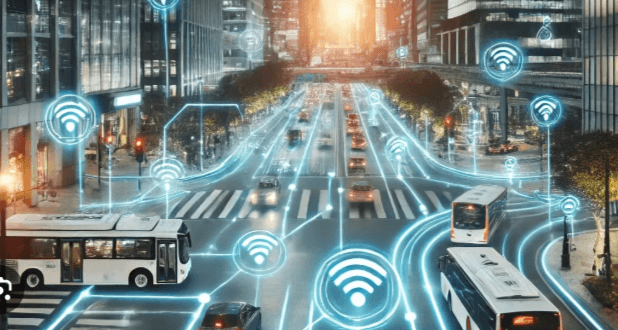
AI enables cities to monitor traffic in real time and forecast congestion with predictive analytics. Data from cameras, sensors, and connected devices inform adaptive signal timing, dynamic routing, and incident response. Designs emphasize safety, interoperability, and privacy safeguards, while governance and ROI analyses guide scalable deployment. The approach balances efficiency with equity, yet questions remain about governance, data equity, and long-term costs, inviting further examination of policy choices and implementation trade-offs.
AI-powered traffic management systems collect and analyze real-time data from cameras, sensors, and connected devices to optimize signal timing, incident response, and adaptive routing. They quantify traffic latency, identify bottlenecks, and test policy scenarios for resilience. The approach emphasizes transparency, accountability, and equitable outcomes, ensuring equity access while balancing efficiency with safety and freedom to pursue mobility options.
Real-time data streams from traffic cameras, road sensors, and connected vehicles are continuously synthesized to produce actionable insights, enabling precise signal timing, dynamic routing, and rapid incident containment.
AI driven congestion informs policy with predictive dashboards, ethical data use, and privacy safeguards.
Routing optimizations, incident detection, adaptive signaling, and safety enhancements support transparency metrics, public engagement, cost benefit analysis, and ROI forecasts.
See also:How AI Helps Buyers Find Properties
The approach emphasizes scalable, data-driven policies, transparent performance metrics, and interoperable systems.
It analyzes design trade-offs, prioritizes safety and efficiency, and outlines consistent evaluation methods to inform continuous improvements in traffic routing and signal timing.
Effective deployment of AI traffic solutions hinges on navigating trade-offs among algorithmic performance, governance, and measurable returns, while acknowledging practical constraints such as data quality, privacy, and interoperability. The discussion examines governance clarity, cost-benefit transparency, and ROI realism, balancing privacy concerns with innovation. Bias mitigation, auditability, and robust evaluation frameworks are essential to maintain public trust and ensure scalable, ethical deployment.
The measurable benefits emerge within months to a few years, depending on data quality and integration. Speed limits optimization and real-time signaling reduce congestion, but algorithm bias must be continuously monitored to ensure equitable outcomes and policy alignment.
Yes, AI traffic solutions can scale to metro areas, but scaling challenges and data interoperability must be addressed; policy frameworks should prioritize modular interoperability, standardized data, and transparent governance to maintain freedom while enabling coordinated, data-driven transportation optimization.
Metaphorically unpacking a map, the analysis notes hidden costs and data governance challenges: deployment, integration, and ongoing maintenance demand funding, talent, and governance; without rigorous cost tracking and standards, freedom to optimize traffic becomes precariously tethered to opaque metrics.
Evaluating vendors hinges on transparent criteria and data quality benchmarks; agencies should standardize due diligence, verify provenance, and require reproducible performance metrics. Data quality, provenance, and governance frameworks drive procurement decisions and risk controls, aligning vendor outcomes with policy objectives.
Unintended consequences may emerge: neighborhoods experience traffic pattern shifts, with increased cut-through routes or speed changes. Data show variable impacts on noise and air quality. Policymakers should anticipate neighborhood disruption, implement mitigation, and monitor equity and transparency.
AI-enabled traffic systems offer measurable gains in efficiency, safety, and equity by integrating real-time data, predictive analytics, and adaptive signaling. Policy-minded evaluation shows consistent reductions in latency and incident response times, while governance and privacy protections sustain public trust. Despite implementation costs and interoperability hurdles, demonstrated ROI supports scalable deployment. Like a well-tuned orchestra, synchronized signals harmonize urban flow, but ongoing oversight, transparent metrics, and inclusive engagement are essential to sustain performance and public legitimacy over time.